
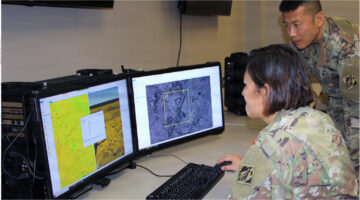
First-of-its-kind electromagnetic spectrum exercise tests senior leaders in Arctic conditions
Aurora Pulse focused top operational and planning staffs of combatant commands on how to fight in a degraded spectrum environment in the Arctic.
Aurora Pulse focused top operational and planning staffs of combatant commands on how to fight in a degraded spectrum environment in the Arctic.

Mythos is just the first of a new generation of AIs that can patch vulnerable code at superhuman speed, said Pentagon CTO Emil Michael and Cyber Policy chief Katie Sutton, downplaying the uniqueness of Anthropic.


The challenge for Western democratic institutions is not a lack of capability — it is a structural one.


Unveiled at SAHA 2026, ASELSAN’s latest portfolio reflects a layered and integrated defense architecture, bringing together electronic warfare, counter-UAV, airborne and naval capabilities within a unified operational framework.

I Corps, headquartered in the Pacific, will be the next focus for NGC2 next year.
As cyberattacks increasingly aim to disrupt operations rather than just steal data, GEOINT providers need models that can continue operations under attack, Norman Laudermilch writes.

After exploring a Pacific-war scenario with cybersecurity executives from 14 tech firms, the Army wants to fast-track new AI tools — and thrash out new policy to allow more autonomy for AI “agents.”


Answering the Pentagon’s call to bolster defense industrial base.

The creation of a Corps-wide Portfolio Acquisition Executive will bridge the Valley of Death when it comes to capabilities being tested as part of Project Dynamis.

The Defense Department has made agreements with Amazon Web Services, Google, Microsoft, NVIDIA, OpenAI, SpaceX, and Reflection, according to an announcement this morning, with an eighth, Oracle, added just hours later.

The Army's FY27 budget request allows faster fielding and continued experimentation on key electronic warfare and signals intelligence capabilities.

Though there is not a current requirement or program of record for such systems, they have been fielded to Marines due to an "urgent field need.”


As space threats continue to evolve, existing satellites need new capabilities to defend and protect, even after launch.

The commercial solutions offering aims to produce a "library" that will provide options for units to determine what capabilities meet their structure and mission.

The Eight-Factor Risk Framework's theoretical foundation describes the three zones every audience holds simultaneously.
A Google Gemini tool on GenAI.mil allows Defense Department personnel to create their own AI agents to handle data and automate online tasks.